Longevity · 4 min read
What is longevity, and how is healthspan different from lifespan?
Living longer and living well are connected goals. Learn what healthspan means, which everyday habits have useful evidence, and how to read longevity claims.
Longevity describes how long a person lives. Healthspan describes the part of life spent in good health and with the ability to do the things that matter to them. The two often move together, but they are not interchangeable. Extra years are more valuable when they include independence, relationships and ordinary daily pleasures.
That makes a useful starting question less abstract than “How do I live to 120?” Try “What would help me keep walking, thinking, sleeping and participating well over the next decade?” It turns a distant promise into choices you can evaluate today.
Does healthy aging mean being free of every illness?
No. Healthspan is used differently across studies: some measure years without major disease, while others include physical function, cognition or disability. The World Health Organization takes a broader view of healthy aging, emphasizing the abilities people need for well-being. A person with a well-managed condition can still have a fulfilling, active life. Housing, access to care, social support and the surrounding environment also shape what is possible. WHO: Ageing and health
For your own planning, choose a few concrete abilities that matter. Carrying groceries, enjoying a trail, preparing meals and staying connected with friends are easier to understand than a single “anti-aging score.” They also make room for different bodies and circumstances.
What can I do now?
The National Institute on Aging identifies physical activity, healthy eating, sufficient sleep and proactive health care as practical parts of healthy aging. These habits support several systems at once rather than relying on one ingredient to solve everything. NIA: What do we know about healthy aging?
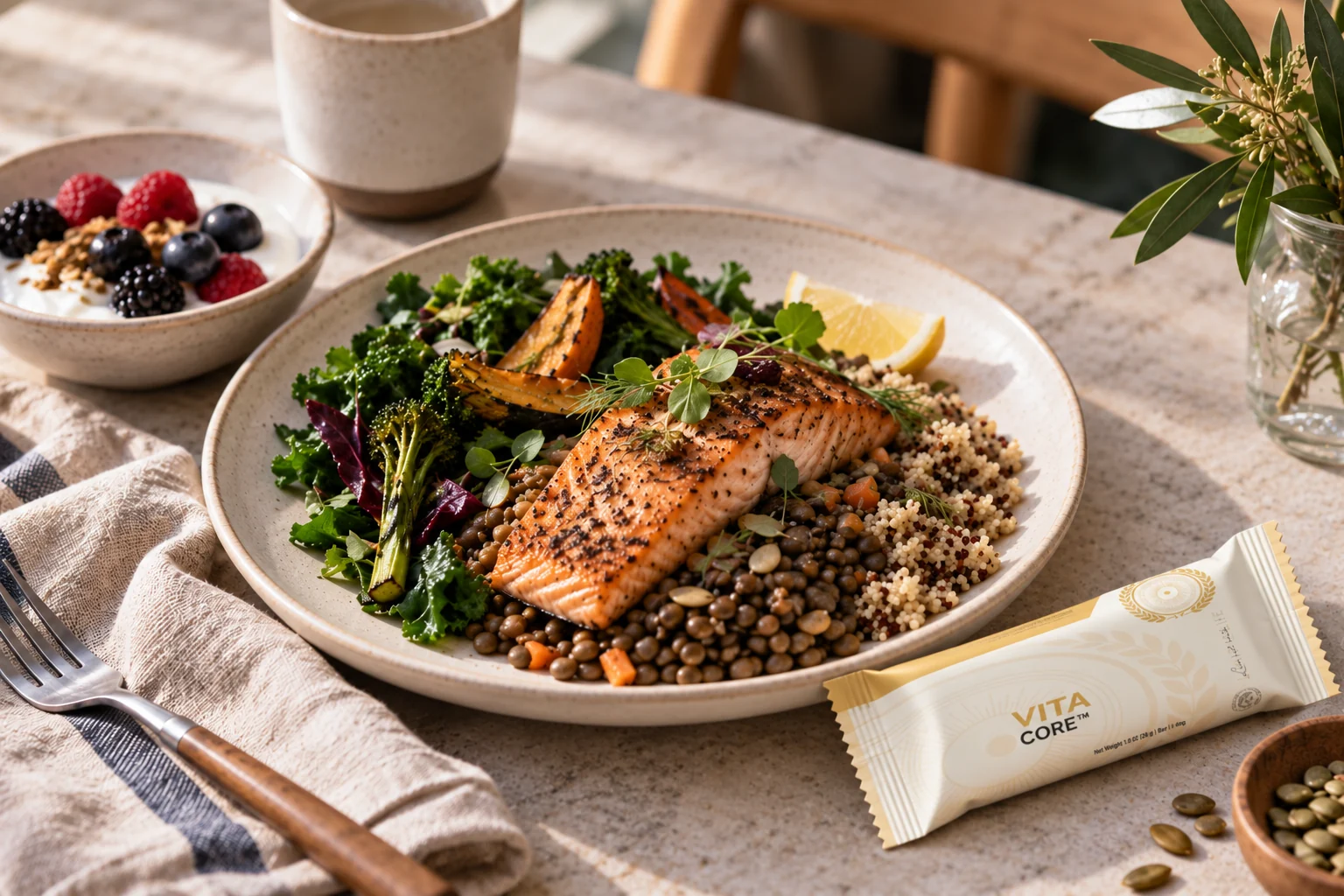
Start with a change small enough to repeat. You might attach a short walk to lunch, prepare an easy protein-containing breakfast, or create more time for sleep. If an activity is difficult, adjust the activity to your current ability. Progress does not have to look like somebody else's routine.
Movement includes walking, cycling, wheeling, household tasks and recreation. WHO emphasizes that all activity counts and that some is better than none. Muscle-strengthening activity is also valuable. A routine can therefore be simple and enjoyable while still serving a meaningful purpose. WHO: Physical activity
For two everyday starting points, read protein and nutrition for healthy aging and how sleep supports healthy aging.
Can a biological-age test tell me how long I will live?
Researchers are developing measures that use blood markers, DNA methylation and other signals to study aging. These can help compare groups and test ideas. Chronological age is simply time since birth; a biological-age estimate tries to summarize some aspect of how a body has changed.
However, different tests measure different things, and even different organs in one person can age differently. A lower estimate after an intervention is not, by itself, proof of longer life or better function. Ask what was measured, how reliable the measurement is, and whether it predicts an outcome that matters to you. NIA: Can we slow aging?
A useful claim should connect the result to the question being asked. A short trial that changes a laboratory marker can be interesting without answering whether a person will avoid disability twenty years later.
Does connection count as part of longevity?
Yes. A plan built only around food and fitness misses a substantial part of well-being. Social isolation means having few social contacts; loneliness is the distress of feeling alone. They can overlap, but living alone does not automatically mean either one. NIA describes associations between isolation or loneliness and poorer health outcomes. NIA: Staying connected
A practical step might be a regular phone call, a shared meal or an activity that gets you around people you enjoy. Choose something accessible to you. The goal is meaningful connection rather than filling every hour with appointments.
How do I start without tracking everything?
Choose one habit and one real-life outcome. For example, schedule two short walks this week and notice whether the routine is comfortable enough to repeat. Put an easy meal option on your grocery list. Make room for a conversation you have been postponing.
Review what helped and what got in the way, then adjust. If the obstacle is pain, exhaustion, access or a persistent symptom, get help with that obstacle. A complicated dashboard cannot solve a problem it has not identified.
Where do supplements fit?
A supplement may have a specific role, such as addressing a nutritional need, but the phrase “longevity supplement” is not a guarantee of longer life. Compare the ingredient, studied population and measured outcome rather than treating every attractive label as equivalent. Our NMN, NR and NAD+ evidence guide explains that distinction.
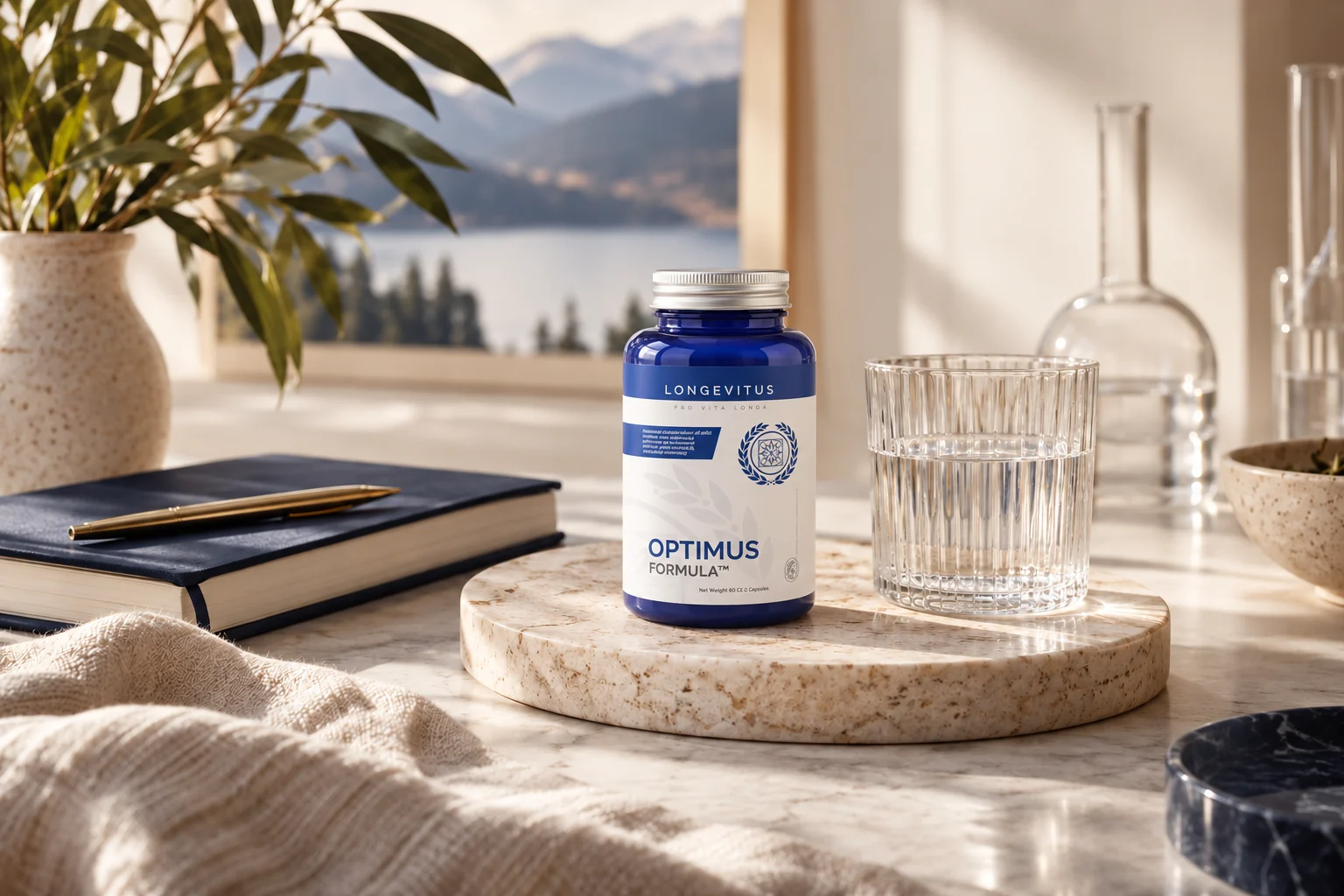
Longevitus brings this longer perspective to its creative world through collections such as Prometheus and Optimus. Both are currently collection and packaging previews, with final product details to be confirmed at launch. Their names and artwork express a brand direction; they do not establish a health benefit.
A practical longevity plan can begin this week: identify one ability you want to preserve, choose one repeatable habit, and use your usual health care to address symptoms or risks that need individual attention. Healthy aging is an ongoing process with room for adjustment.
Sources & further reading
- Ageing and health — World Health Organization
Healthy aging, diversity of older adults, and environmental influences.
- What Do We Know About Healthy Aging? — National Institute on Aging
Lifestyle foundations and proactive health care.
- Physical activity — World Health Organization
All movement counts and benefits of activity.
- Research in Context: Can we slow aging? — National Institute on Aging
Biological age, organ-specific aging, and limits of surrogate measures.
- Loneliness and Social Isolation: Tips for Staying Connected — National Institute on Aging
Definitions, associations and practical social connection.
This article is published by Longevitus for education. Research about an ingredient does not establish that a Longevitus product has the same effects. Product ingredients, directions and current availability belong on the product page. For personal medical or treatment questions, consult a qualified health professional.