Nutrition · 5 min read
What should I eat for healthy aging, and how important is protein?
Protein matters, but healthy aging starts with an eating pattern you can sustain. A practical guide to food variety, plant proteins and everyday meals.
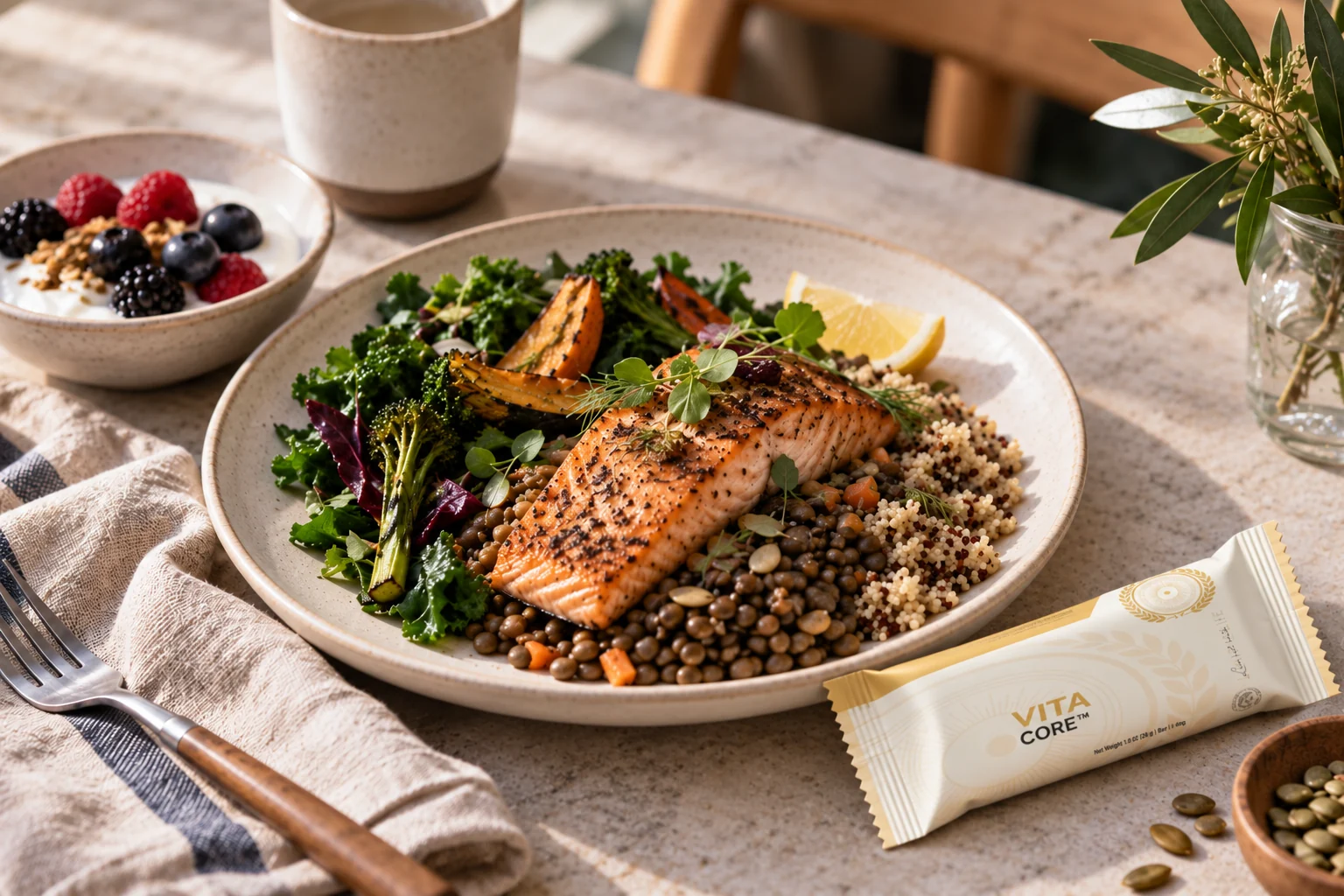
A varied eating pattern that includes protein foods, vegetables, fruits and whole grains is a useful foundation for healthy aging. Protein deserves attention because maintaining muscle and function matters over time, but one nutrient cannot replace the rest of a meal.
The practical goal is enough nourishing food you can afford, enjoy and prepare regularly. It should support your current needs, not force you to follow a complicated diet because it carries a longevity label.
Why does protein matter as we age?
Protein-containing foods provide building blocks the body uses, along with other nutrients. Muscle function is important for ordinary activities, and aging is often accompanied by changes in muscle. Food and physical activity belong in the same conversation: muscle-strengthening activity and regular movement support function, while a nourishing diet helps meet the body's needs. NIA: What do we know about healthy aging?
“High protein” is therefore not a complete quality measure. Consider what else the food brings: fibre, vitamins and minerals, or added sodium and saturated fat. A varied pattern gives you more ways to meet your needs than relying on a single product.
Is plant protein useful?
Yes. Canada's Food Guide recommends choosing plant-based protein foods every day. Beans, lentils, tofu, nuts and seeds can provide protein, while many also offer fibre and less saturated fat than some other protein choices. Eggs, fish, lean meat, lower-fat dairy and fortified soy beverages can also fit a varied pattern. Health Canada: Eat protein foods
A 2024 analysis of the Nurses' Health Study followed the long-term relationship between midlife protein intake and later healthy aging in nearly 49,000 women. Higher plant-protein intake was associated with better odds of the study's healthy-aging outcome, which included disease and physical, cognitive and mental-health measures.
This was an observational study using dietary questionnaires. It cannot prove that plant protein itself caused the benefit, and the findings should not be presented as a guarantee for every population. It does provide a useful reason to investigate dietary patterns rather than asking only which powder is best. Original cohort study
What does a simple meal look like?
Use the Food Guide pattern as a starting point: plenty of vegetables and fruits alongside whole grains and protein foods. Healthy eating also includes planning, cooking, enjoying food and sharing meals when possible. Health Canada: Healthy eating recommendations
For an ordinary weekday, that could mean oats with yogurt and berries, a chickpea-and-vegetable lunch with whole-grain bread, and a dinner of tofu or fish with vegetables and brown rice. These are examples, not a required menu. Use foods that suit your culture, budget, preferences and allergies.
Convenience can help. Choose an easy protein food you already enjoy, keep a vegetable option ready, and prepare a grain or other meal component in advance. A repeatable meal is often more useful than an ambitious recipe you make once.
Do I need a protein powder or multivitamin?
Not automatically. A protein powder is a format, not proof of a better diet or longer life. If appetite, preparation or dietary restrictions make it hard to eat adequately, a dietitian can help assess whether a supplement would fill a real gap.
Some nutritional recommendations are specific. For example, Health Canada's guidance for adults aged 51 and older recommends a daily supplement containing 400 IU, or 10 micrograms, of vitamin D. Individual medical circumstances can change the advice you need. It is better to match a product to a defined need than to collect overlapping “healthy-aging” blends. Health Canada: Healthy eating for seniors
People with a condition affecting diet, including kidney disease, should get advice suited to that condition before changing protein intake substantially. NIDDK explains that some people with chronic kidney disease need to moderate protein, while too little can lead to malnutrition. The appropriate balance is individual. NIDDK: Eating with chronic kidney disease
Unintentional weight loss or difficulty eating also deserves attention rather than a shopping-only solution.
Can this work on a small budget?
It can begin with ordinary ingredients. Think about one meal you make often and one affordable addition: beans in a soup, lentils in a sauce, tofu in a stir-fry, or yogurt with fruit. Frozen vegetables and simple whole grains can make the rest of the meal easier.
Compare food labels when choosing packaged options, and choose foods you will actually eat. A large purchase that sits unused is less helpful than a modest meal you enjoy. Planning a second use for an ingredient can also make shopping and preparation simpler.
What about hydration and activity?
Older adults may feel thirst less strongly, so regular opportunities to drink are helpful. Water remains a simple everyday choice; food and other drinks also contribute fluid. Health Canada: Healthy eating for seniors Read our hydration and caffeine guide for the difference between hydration and stimulation.
WHO's activity guidance emphasizes that all movement counts and that muscle strengthening is beneficial. Food choices work within that wider routine, alongside sleep. WHO: Physical activity
Longevitus' Vita Core collection explores everyday nutrition formats. It currently shows coming-soon concepts, with final ingredients, directions and availability to be confirmed at launch. These concepts do not replace meals or establish a health benefit.
Begin with one practical improvement: add a protein food to a meal that lacks one, choose a plant option you enjoy, or make tomorrow's lunch easier to assemble. Consistency leaves room for both nourishment and pleasure.
Sources & further reading
- What Do We Know About Healthy Aging? — National Institute on Aging
Muscle, physical activity and healthy eating.
- Eat protein foods — Health Canada
Protein-food examples, plant proteins and food-label considerations.
- Dietary protein intake in midlife in relation to healthy aging — prospective Nurses' Health Study
Observational cohort of 48,762 women; association is not causation.
- Healthy eating recommendations — Health Canada
Variety, planning and meals.
- Healthy eating for seniors — Health Canada
Hydration, appetite-related adaptations and vitamin D guidance.
- Physical activity — World Health Organization
All movement counts; muscle strengthening.
- Healthy Eating for Adults with Chronic Kidney Disease — NIDDK
Individual protein needs and risk from too much or too little in CKD.
This article is published by Longevitus for education. Research about an ingredient does not establish that a Longevitus product has the same effects. Product ingredients, directions and current availability belong on the product page. For personal medical or treatment questions, consult a qualified health professional.