Skincare · 5 min read
SNAP-8 and expression lines: what does the evidence show?
A careful look at SNAP-8, why research on a different peptide cannot prove its effects, and how to judge the promise of a cosmetic serum.
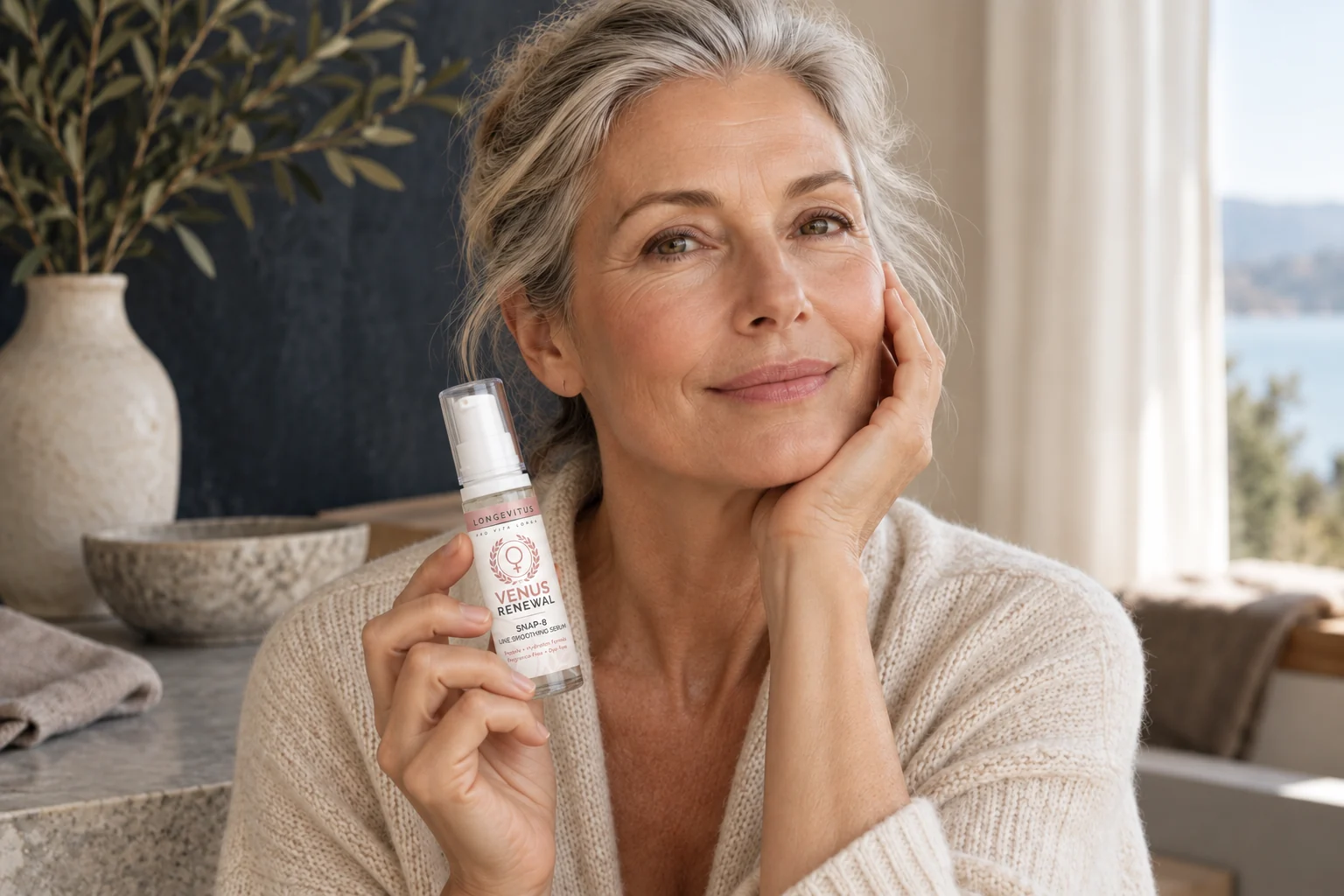
SNAP-8 is a cosmetic peptide associated with the ingredient name Acetyl Octapeptide-3. It is discussed in relation to expression lines, but an ingredient explanation is not the same as proof that a particular serum will deliver a particular result.
The most honest answer to “does SNAP-8 work?” depends on the formula, the outcome being measured and the quality of the evidence. There is no good reason to promise that a topical serum will reproduce the outcome of an injectable procedure.
Start with the ingredient identity
SNAP-8 is an octapeptide: a peptide made from eight amino acids. The NIH's substance registry lists SNAP-8 among the names for Acetyl Octapeptide-3 and records its peptide identity. A substance registry can help identify an ingredient; it does not evaluate a serum's cosmetic results or establish the performance of a finished formula. View the NIH substance record.
Two details can easily get lost in marketing. A trade name may refer to a raw ingredient preparation, not the whole serum sold to a customer. And a percentage of that preparation is not necessarily the percentage of pure peptide in a finished formula. A headline number without those details is difficult to interpret.
Expression lines are a specific concern
A smile, a raised eyebrow and a squint change the way facial skin folds. Over time, some lines remain visible when the face is relaxed. The AAD explains that repeated facial movements contribute to lasting lines; sun exposure and other aspects of skin aging also matter. AAD guidance on premature skin aging.
This is a reason to define the result you are looking for. A smoother-looking surface, softer-feeling skin and a line that looks less noticeable are separate observations. They do not, by themselves, demonstrate that a cosmetic has altered the underlying muscle movement.
Do not borrow a different peptide's results
You may see SNAP-8 mentioned beside Argireline. Research on Argireline is relevant background, but it concerns a different peptide.
A 2013 randomized, placebo-controlled study of Argireline involved 60 participants and reported improvement in the appearance of wrinkles around the eyes after four weeks. It did not test SNAP-8 or a Longevitus serum. Read the original Argireline trial.
Another small, blinded study published in 2023 compared a hyaluronic-acid serum with and without Argireline on opposite sides of the face in 19 participants. It found no statistically significant difference between the sides after four weeks. That study also did not test SNAP-8. Read the original split-face study.
The different findings show why one favourable paper should not become a universal claim for a whole peptide category. They also show why the precise ingredient, formulation and measurement method belong beside the result.
What would useful finished-product evidence look like?
For a SNAP-8 serum, look for a study that names the complete formula and explains its comparison. A cream base can change skin's appearance on its own, so comparing the finished product only with the starting photograph leaves important questions open.
Ask whether the study measured wrinkles with a consistent method, whether photographs used the same lighting and expression, and whether the people judging them knew which treatment was used. Look for the number of participants, the duration, adverse effects and the range of responses.
These questions apply to impressive before-and-after images, too. A camera angle, a smile, a light source or an editing choice can make a comparison look stronger. A personal photo can be a useful diary entry without being proof of the ingredient's mechanism.
Exploring the Longevitus options
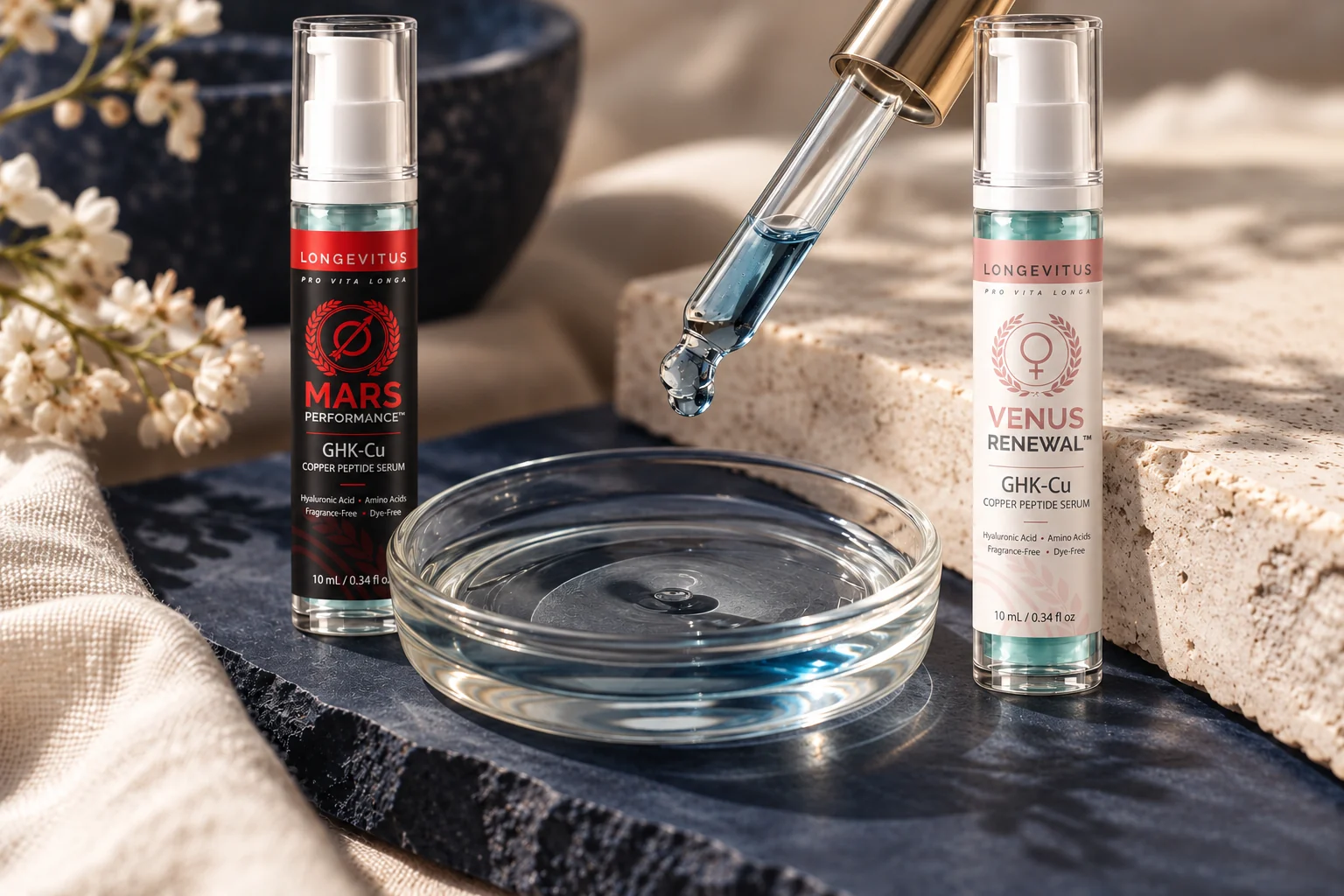
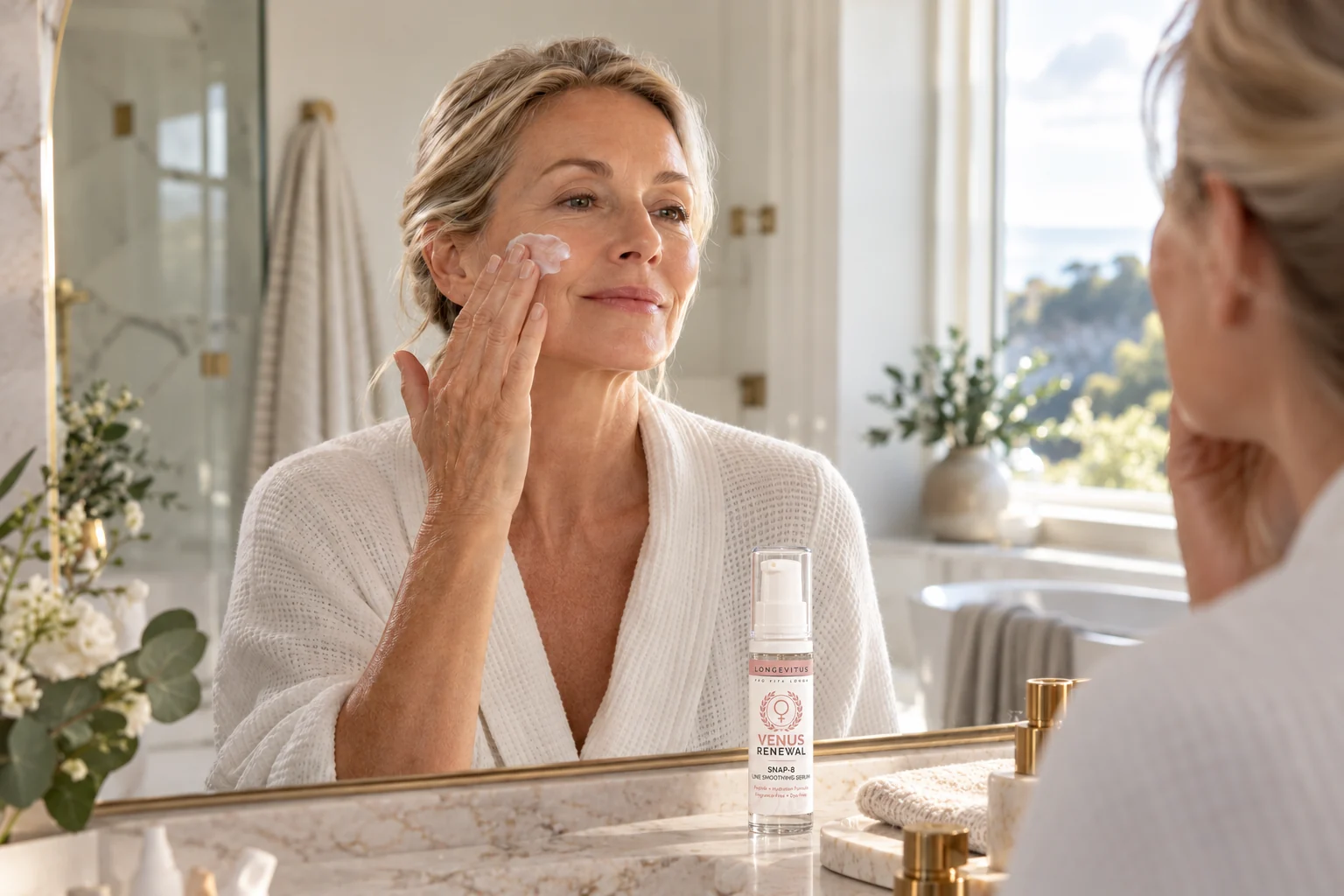
Longevitus currently lists VENUS Renewal SNAP-8 Serum and MARS Performance SNAP-8 Serum at $79.95 CAD each. Check the relevant product listing and packaging for current ingredients and directions. The scientific studies above are not clinical tests of these products.
Treat an optional serum as a considered addition to your routine, with a defined cosmetic goal and realistic expectations. Follow its instructions; more frequent use than directed does not establish a better outcome. Health Canada requires accurate cosmetic claims and distinguishes them from therapeutic claims. Health Canada's cosmetic advertising guidance.
Before you add a bottle, read how to introduce and layer serums. To compare the research stories behind different peptide names, explore GHK-Cu copper peptides. And keep the broader routine in view with our guide to skin-aging evidence. A thoughtful choice begins with a clear question and evidence that belongs to the product you are considering.
Practical questions
Is a serum percentage the same as pure peptide content?
Not necessarily. Supplier information may describe the amount of a raw ingredient solution used in a formula. You need the actual product documentation to know what a percentage represents. Do not assume a number attached to a supplier's test describes the bottle you are buying.
Can I use Argireline results to choose SNAP-8?
They can help you understand why related cosmetic peptide research attracts interest. They cannot establish SNAP-8's effect, the right application schedule for your product or its likely result. Keep the ingredient name attached to the study when comparing claims.
What should I look for in a before-and-after photograph?
Look for a relaxed expression, matching angle and distance, similar lighting and an explanation of what else changed during the period. A useful comparison needs a consistent method. Even then, a single person's image does not describe everyone's likely response.
What would make me more confident about a serum claim?
A clear finished-product study with a comparison, documented methods and results that match the advertised wording. If the claim is much broader than the measured outcome, ask for clarification. A cosmetic can be enjoyable to use without being described as equivalent to a medical procedure.
Sources & further reading
- Acetyl Octapeptide-3 — NIH Global Substance Registration System
Ingredient identity, SNAP-8 synonym and eight-residue peptide; registry entry is not efficacy evidence or product approval.
- 11 ways to reduce premature skin aging — AAD
Facial expression and skin-aging context.
- Argireline in Chinese subjects: randomized placebo-controlled study
Original study of a different hexapeptide; never attributed to SNAP-8.
- Argireline in a hyaluronic-acid serum: split-face study
Original small study with no significant between-side effect; different peptide and formula.
- Cosmetic advertising, labelling and ingredients — Health Canada
Accurate cosmetic claim and therapeutic boundary.
- VENUS Renewal SNAP-8 Serum — Longevitus
Live name and CAD price checked 2026-10-02; no invented concentration or complete formula.
- MARS Performance SNAP-8 Serum — Longevitus
Live name and CAD price checked 2026-10-02; no invented clinical benefit.
This article is published by Longevitus for education. Research about an ingredient does not establish that a Longevitus product has the same effects. Product ingredients, directions and current availability belong on the product page. For personal medical or treatment questions, consult a qualified health professional.