Skincare · 5 min read
What actually works for skin aging?
Start with sun protection, comfortable hydration and evidence you can trace. A clear guide to the habits and ingredients that deserve a place in your routine.
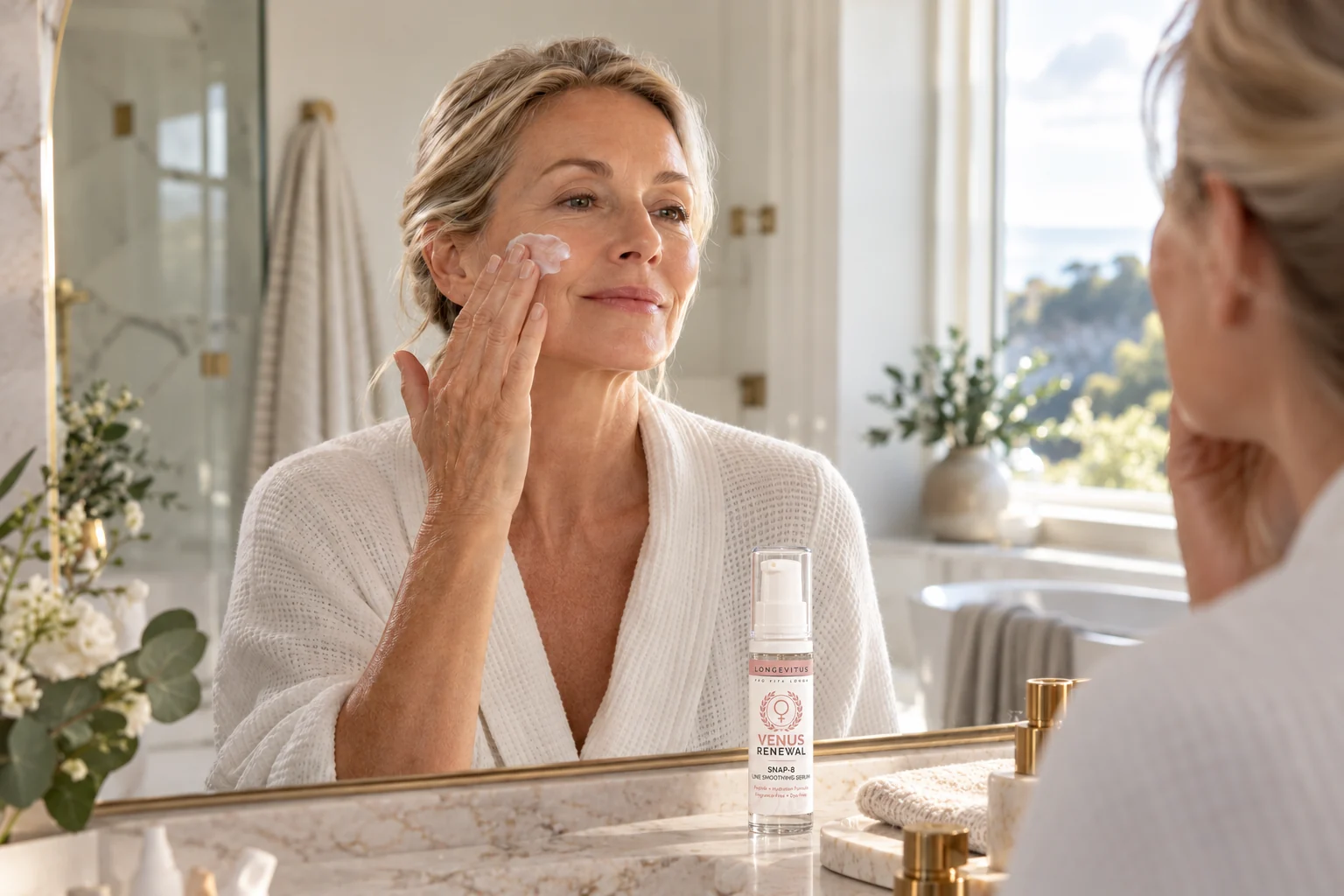
The most useful skincare routine for visible aging starts with sun protection and moisturizer. Retinoids can help some concerns, while other ingredients deserve a closer look at the research behind the actual formula. You do not need a crowded shelf to care well for your skin.
The word “anti-aging” can make ordinary changes sound like a problem to solve. Lines, changing texture and a different sense of firmness are part of living. A good routine can support the appearance and comfort of your skin without promising to turn back time.
Start with the habit that protects your investment
Sun protection has unusually strong evidence for a skincare habit. In a randomized Australian trial involving 903 adults younger than 55, researchers compared daily sunscreen use with discretionary use over 4.5 years. The daily-use group had less progression of skin aging. The outcome was assessed through skin-surface measurements; it does not mean sunscreen erased every existing facial wrinkle. Read the original sunscreen trial.
For everyday Canadian use, Health Canada recommends broad-spectrum SPF 30 or higher, generous application before going outdoors, and reapplication during exposure according to the label. Shade and clothing are part of the same approach. A serum cannot take over that job. Health Canada sunscreen guidance.
Choose a sunscreen you are willing to use consistently. The elegant routine that stays in a drawer is less useful than the comfortable one that becomes part of getting ready.
Moisturizer has a different job from a treatment
Moisturizer helps hold water in the skin, which can make some fine lines look less noticeable. That change in appearance is valuable, but it should not be confused with the same effect as a prescription treatment or procedure. The American Academy of Dermatology includes daily moisturizer among its practical recommendations for wrinkles. AAD wrinkle guidance.
This distinction helps you judge results fairly. Softer-feeling skin after a few applications may be a hydration benefit. It does not establish that a product rebuilt the underlying structure of your skin. Ask what the product claims to change, how that change was measured, and whether that is the result you want.
Retinol has evidence, and also limitations
Retinol belongs to the retinoid family of vitamin A ingredients. In one randomized, blinded study, researchers applied a specific retinol lotion to the arms of older adults for 24 weeks and found improvement in fine wrinkling compared with the vehicle lotion. The study tested that formulation, on that body site, in that population. It was not a trial of every retinol serum sold today. Read the original retinol study.
Retinoids can also irritate skin. The AAD advises considering skin sensitivity and starting cautiously; it says retinoids should not be used during pregnancy. A dermatologist can help you decide whether a retinoid suits your circumstances, particularly with ongoing redness or another skin condition. AAD explanation of retinoids and retinol.
A higher percentage is not automatically a better personal choice. A product you tolerate and use as directed is easier to evaluate than one you repeatedly abandon because it makes your skin uncomfortable.
Where do peptides fit?
Peptides are a broad ingredient family, so “contains peptides” is only the beginning of a useful conversation. Different peptides have different research histories. A laboratory finding, a supplier demonstration and a controlled trial of a finished serum answer different questions.
Our guides to GHK-Cu copper peptides and SNAP-8 and expression lines explain those differences. Neither ingredient name alone tells you what a particular bottle will do.
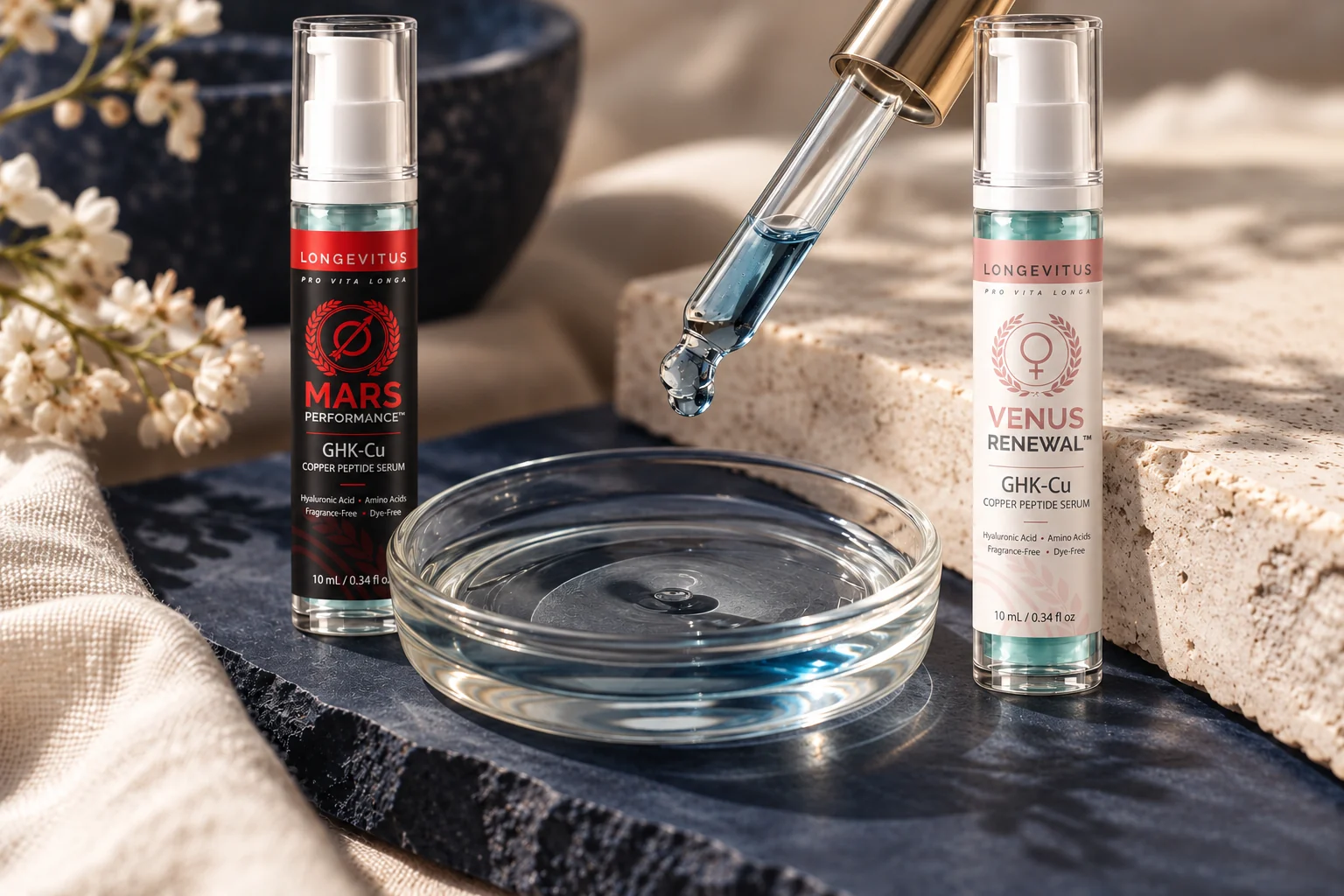
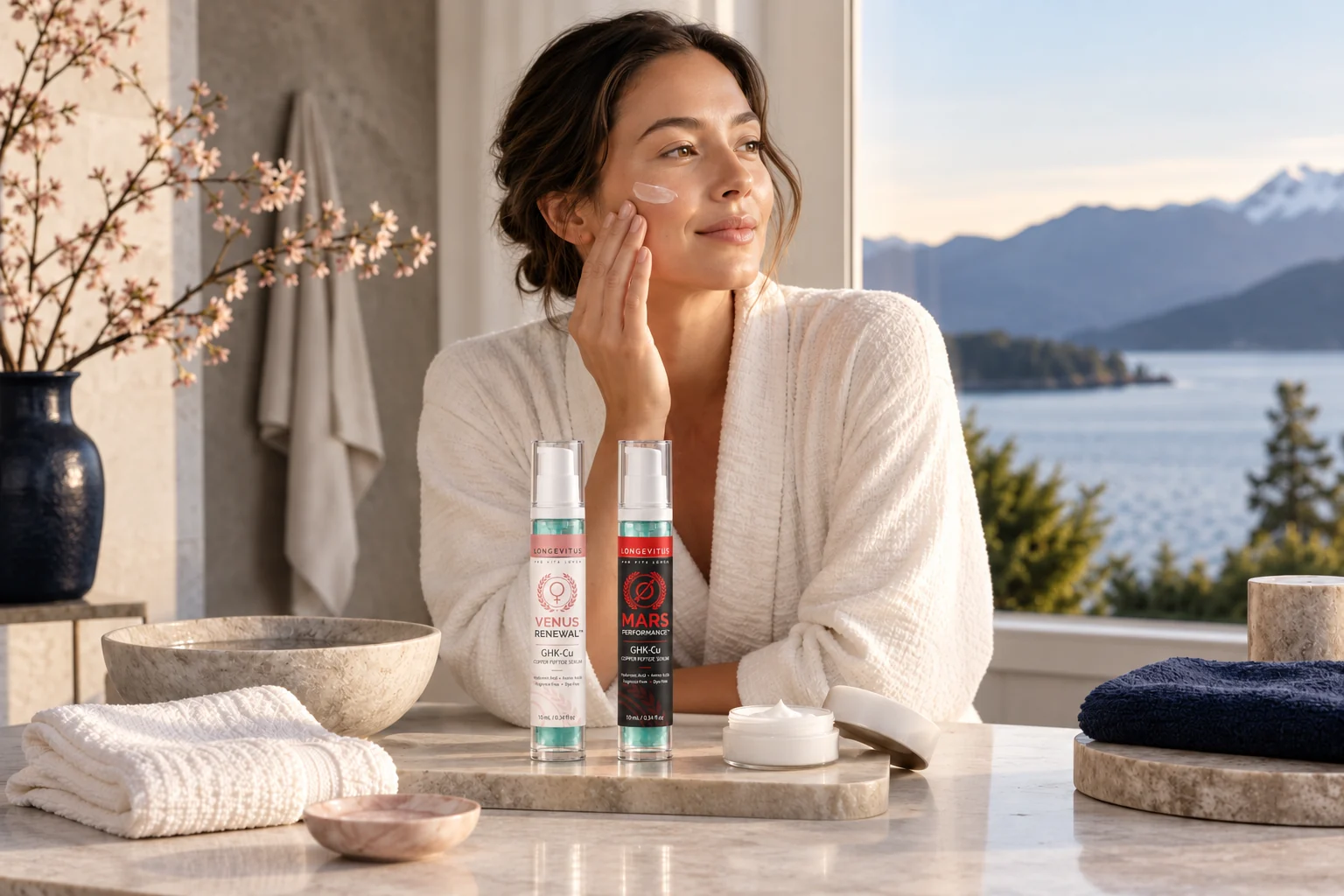
Longevitus offers VENUS Renewal GHK-Cu Serum and MARS Performance GHK-Cu Serum, each currently listed at $79.95 CAD in a 10 mL pump bottle. These are product details, rather than clinical outcome claims. Review the individual listing and packaging for ingredients and directions before choosing.
Build a routine you can actually assess
Keep your cleanser, moisturizer and sun protection consistent before adding an optional serum. Choose one concern rather than expecting one bottle to address everything. Introduce changes separately, and pay attention to comfort as well as appearance.
Use photographs taken in similar light, with a similar expression and camera position, if you want a personal comparison. They can help you notice a pattern, but they are not a controlled clinical test. Lighting alone can change how visible a line looks.
The AAD advises following product directions and allowing time for results, which varies by product and concern. More applications than the label recommends do not establish faster progress. AAD advice on using anti-aging products.
For the practical next step, read how to layer serums and introduce a new product. The routine worth keeping is one with a clear purpose, realistic expectations and room for your skin to feel comfortable.
Practical questions
Should I buy a serum before I have the basics?
First decide whether your cleanser, moisturizer and sunscreen are comfortable and easy to use. A serum can be an optional addition; it should not crowd out the routine you rely on each day. If your budget is limited, you can keep those foundations affordable and choose an extra product only when it has a clear purpose.
Does a more expensive product work better?
Price alone is not evidence. Compare the ingredient information, instructions and research relevant to the finished formula. Packaging and texture can be enjoyable reasons to prefer a product, but they do not establish a stronger clinical effect. The AAD's budget guide supports a simple, affordable approach.
Can I judge a serum after one application?
You can notice how it feels, whether the texture suits you and whether it causes discomfort. One application cannot establish a lasting change in wrinkles. Keep short-term comfort separate from the longer-term claim you are trying to assess.
For a broader view of caring well for yourself over time, read longevity and healthspan explained. Skincare can be one enjoyable part of that picture, without turning normal aging into a daily scorecard.
Sources & further reading
- Sunscreen and prevention of skin aging: a randomized trial
Original randomized trial; outcome and population limits retained.
- Sunscreens — Health Canada
Canadian public guidance for SPF, application and sun exposure.
- Wrinkle remedies — AAD
Moisturizer and visible fine-line guidance.
- Improvement of naturally aged skin with vitamin A (retinol)
Specific arm-lotion study; not generalized to every commercial product.
- Retinoid or retinol? — AAD
Retinoid suitability, irritation and pregnancy guidance.
- How to maximize results from anti-aging skin care products — AAD
Product directions and realistic evaluation timelines.
- VENUS Renewal GHK-Cu Serum — Longevitus
Live product name, price, format and size checked 2026-10-02.
- MARS Performance GHK-Cu Serum — Longevitus
Live product name, price, format and size checked 2026-10-02.
- Skin care on a budget — AAD
Price alone does not establish efficacy; affordable simple routine.
This article is published by Longevitus for education. Research about an ingredient does not establish that a Longevitus product has the same effects. Product ingredients, directions and current availability belong on the product page. For personal medical or treatment questions, consult a qualified health professional.